
Energy efficiency regulations
In Thailand, energy efficiency regulations play a crucial role in driving sustainable development and addressing energy security concerns. These regulations encompass various sectors including buildings, appliances, and industrial processes, aiming to enhance energy performance and reduce energy consumption. To address this escalating demand, the government initiated Demand Side Management (DSM) measures, starting from December 3, […]
In Thailand, energy efficiency regulations play a crucial role in driving sustainable development and addressing energy security concerns. These regulations encompass various sectors including buildings, appliances, and industrial processes, aiming to enhance energy performance and reduce energy consumption. To address this escalating demand, the government initiated Demand Side Management (DSM) measures, starting from December 3, 1991, and formally introduced on September 20, 1993, under the “Together Conservation” project. These initiatives promote energy-efficient electricity usage, crucial for meeting rising demands while mitigating the need for further production expansion. The introduction of the “Energy Conservation Label No. 5” on September 20, 1993, underscores this commitment, providing consumers with essential information to make informed choices, thus bolstering economic stability.
The Energy Conservation Label, now issued by the Ministry of Energy since 2006, serves as a critical tool in selecting energy-efficient electrical appliances. It offers detailed information such as electricity usage levels, efficiency ratings, and annual costs, aiding consumers in making cost-effective and efficient choices. Standardized testing by EGAT and the Ministry of Energy determines the label, with higher ratings indicating greater energy efficiency.
The objectives of the Energy Conservation Label No. 5 project are multifaceted, aiming to promote informed energy usage, encourage manufacturers to produce efficient appliances, and support energy-saving technologies. By targeting residential, commercial, and industrial sectors, the project employs strategies to enhance energy conservation practices among consumers, ultimately reducing national energy consumption and environmental impact.
Notably, the residential sector, representing a significant portion of total electricity consumption, is a primary focus for energy-saving initiatives. Various labeling programs have been introduced for appliances ranging from refrigerators to electric motorcycles, promoting the adoption of high-efficiency models and phasing out inefficient devices like incandescent bulbs.
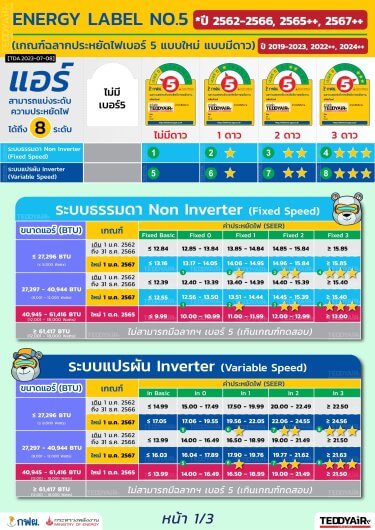
In recent updates, the Energy Label No. 5 has evolved into Energy Label No. 5 Star, featuring star ratings alongside numerical efficiency levels. This enhancement signifies even greater energy savings and reflects ongoing efforts to improve energy efficiency standards.
The impact of these initiatives is tangible, with substantial reductions in electricity usage, demand, and carbon dioxide emissions. Choosing appliances with the Energy Saving Label No. 5 has resulted in significant cost savings, reduced electricity demand, and environmental benefits, demonstrating the effectiveness of energy conservation efforts.
background:
The societal expansion and economic growth in Thailand have resulted in an increased demand for electricity. This has compelled the Electricity Generating Authority of Thailand (EGAT) to expand its production capacity to meet the rising electricity needs. Apart from sourcing and investing in the construction of new power plants, the use of fuel for electricity production also requires substantial and continuous financial investment, impacting the economic stability of the country.
Demand Side Management (DSM) initiatives, approved by the government since December 3, 1991, and officially introduced on September 20, 1993, under the “Together Conservation” project, aim to promote energy-efficient electricity use. These initiatives encourage the public to use electricity efficiently and have been essential in addressing the challenges posed by the increasing demand for electricity and the consequent need for expanded production. The official introduction of the “Energy Conservation Label No. 5” on September 20, 1993, further underscores the commitment to energy conservation, providing consumers with information to make informed choices and contributing to the economic stability of the country. The current issuer of the Energy Conservation Label is the Ministry of Energy, marked with the ministry’s emblem on the label. This practice began in the year 2006, replacing the previous issuer, the Electricity Generating Authority of Thailand (EGAT), which had no logo. In 2019, the Ministry of Energy updated the label, eliminating levels 1 to 4 and retaining only level 5. However, they introduced star symbols to indicate the efficiency rating. More stars imply higher efficiency, resulting in energy savings of 5-10%. The label includes four levels: 5 stars, 1 star, 2 stars, and 3 stars.
The “Energy Conservation Label No. 5” is an indispensable tool in choosing various electrical appliances because it provides fundamental information about each type of appliance. This includes electricity usage levels, energy efficiency ratings, and annual costs, serving as crucial data for decision-making when selecting appliances that offer both cost savings and efficiency.
The Energy Conservation Label is issued based on standardized testing by the Electricity Generating Authority of Thailand (EGAT) and the Ministry of Energy. The label includes efficiency levels ranging from 1 to 5, with 5 being the most energy-efficient. The Energy Efficiency Ratio (EER) is a key indicator, with a rating exceeding 110 units for the highest level of efficiency.
The label includes the following information:
1. Appliance category
2. Year of testing
3. Power usage and annual electricity cost
4. Specific details about the appliance and brand
5. Efficiency rating on a scale of 1-5
The Energy Conservation Label No. 5 is designed to assist consumers like us in making informed decisions when choosing appliances, aiming to achieve the highest electricity cost savings.
Selecting electrical appliances certified with the “Energy Conservation Label No. 5” helps us estimate the approximate annual expenses, indicating how efficiently each type of appliance conserves energy. The label provides the following information:
1. The higher the number, the more energy-efficient the appliance.
2. The label must specify the year of energy testing.
3. It should indicate the type of electrical appliance.
4. It must feature the watermark of the Ministry of Energy in the center of the label.
5. Display energy consumption per year and annual electricity cost, facilitating comparisons between brands.
6. Show regulatory oversight by symbols from the Electricity Generating Authority of Thailand (EGAT) and the Ministry of Energy, in white letters on a green background.
7. Include contact information for additional inquiries at the bottom of the label.
The objectives of the “Energy Conservation Label No. 5” project aim to promote the informed and efficient use of electrical energy, with the following goals:
1. Encourage manufacturers/importers to produce and import electrical equipment that is both highly efficient and reasonably priced.
2. Motivate and cultivate a conservation mindset among the public by providing accurate knowledge and understanding of the proper and efficient use of electrical energy.
3. Offer consumers alternatives to make informed decisions when purchasing high-efficiency products.
4. Support and seek energy-saving technologies, including efficient electricity usage management, to maximize benefits for consumers and the nation as a whole.
The operation of the “Energy Conservation Label No. 5” project aims to achieve a reduction in the overall national energy consumption and mitigate environmental impacts. Therefore, it is crucial to genuinely receive cooperation from all parties. To accomplish this, the Electricity Generating Authority of Thailand (EGAT) adopts a motivational approach by creating awareness and accurate understanding of energy-efficient electricity usage among the Thai population nationwide.
The project targets different user groups, namely residential, commercial, and industrial sectors. It employs the “3 Es” strategy, focusing on energy-efficient appliances, buildings, and behaviors, to encourage and enhance energy conservation practices among consumers.
Energy Label No. 5 is available on which electrical equipment?
Electricity Saving Equipment: Residential Sector
The residential sector, representing approximately 25% of the total electricity consumption in the country, is a significant target for energy-saving initiatives in Thailand. Efforts in this sector aim to promote the adoption of high-efficiency electrical appliances. The Electricity Generating Authority of Thailand (EGAT) collaborates with manufacturers and importers, as well as electrical equipment producers, to encourage the use of efficient electrical appliances.
In addition to driving the development of various high-efficiency electrical appliances, inefficient devices such as incandescent bulbs have been phased out of the Thai market. Initiatives in the residential sector include:
– 2538: Labeling program for energy-saving refrigerators (label no. 5)
– 2539: Labeling program for energy-saving air conditioners (label no. 5)
– 2541: Labeling program for energy-saving bulbs and fire extinguishers (label no. 5)
– 2542: Labeling program for energy-saving rice cookers (label no. 5)
– 2544: Labeling program for energy-saving electric fans (label no. 5)
– 2545: Labeling program for energy-saving compact fluorescent lamps (CFLs) (label no. 5)
– 2547: Labeling program for energy-saving electric rice cookers (label no. 5)
– 2548: Labeling program for energy-saving high-efficiency LED lamps (label no. 5)
– 2552: Labeling program for energy-saving electric fans (oscillating type) and T5 fluorescent lamps (label no. 5)
– 2553: Labeling program for standby power 1 Watt devices (TV/monitor) and bulbs for slim tubes (label no. 5)
– 2554: Labeling program for electric water kettles (label no. 5)
– 2555: Labeling program for energy-saving air circulator fans and electric water heaters (label no. 5)
– 2556: Labeling program for electric irons and top-lid washing machines (label no. 5)
– 2557: Labeling program for microwave ovens, wall-mounted electric stoves, electric kettles, and television sets (label no. 5)
– 2558: Labeling program for display refrigerators and electric pans (label no. 5)
– 2559: Labeling program for automatic electric water pumps (label no. 5)
– 2560: Labeling program for consumer hot/cold water dispensers and consumer refrigerators (label no. 5)
– 2561: Labeling program for clothing products (label no. 5)
– 2562: Labeling program for electric motorcycles.
Timeline
Currently, there are 21 products labeled as Energy Label No. 5, including air conditioners, refrigerators, electric fans, compact fluorescent lamps, electric water kettles, electric rice cookers, electric water heaters, electric irons, washing machines, LED bulbs, microwave ovens, wall-mounted electric stoves, electric kettles, electric rice cookers, display refrigerators, television sets, electric pans, automatic electric water pumps, consumer hot/cold water dispensers, rice cookers, clothing products, and electric motorcycles. Additionally, in early 2564, air purifiers will be another product added to the Energy Label No. 5 category.
What difference of Energy Label No. 5 and Energy Label No. 5 Star?
The electrical utility sector has undergone significant improvements by establishing energy-saving standards for electrical appliances and products labeled as energy-efficient have increased from the original Label No. 5. The updated label, Energy Label No. 5 Star, replaces the numerical indication of energy efficiency with star ratings, indicating greater energy savings.
The original Label No. 5 used a numerical scale from 1-5 to represent energy efficiency, with higher numbers indicating greater energy savings. However, for the new label format, products must achieve energy savings equivalent to Label No. 5 and additionally receive star ratings ranging from 1-3. Therefore, if a product maintains the energy efficiency of the original Label No. 5 and has additional stars, it indicates even greater energy savings.
In summary, while the needle on the energy efficiency scale still points to Label No. 5 for products meeting the original standard, additional stars indicate further energy savings on the Energy Label No. 5 Star.
Moreover, the evolution of Thailand’s energy conservation initiatives demonstrates a proactive approach towards addressing the challenges of escalating electricity demand. By introducing the Energy Conservation Label No. 5 and subsequently upgrading it to the Energy Label No. 5 Star, the government has shown a commitment to promoting energy-efficient practices and empowering consumers to make informed choices.
The comprehensive labeling programs, spanning various electrical appliances and sectors, underscore the holistic approach towards energy conservation. Through collaborations with manufacturers, importers, and stakeholders, Thailand aims to not only reduce electricity consumption but also foster innovation in energy-saving technologies.
Benefits of Energy Efficiency Regulations in Thailand:
-
Reduced Energy Consumption: By mandating the use of energy-efficient technologies and practices, these regulations help to decrease overall energy demand, easing pressure on the country’s energy infrastructure and reducing reliance on fossil fuels.
-
Lower Energy Bills: Improved energy efficiency translates into lower energy bills for consumers and businesses, contributing to cost savings and improved affordability of energy services.
-
Greenhouse Gas Emissions Reduction: Energy efficiency measures lead to lower greenhouse gas emissions, supporting Thailand’s efforts to mitigate climate change and fulfill its commitments under international agreements such as the Paris Agreement.
-
Enhanced Energy Security: By reducing energy consumption and promoting diversification of energy sources, energy efficiency regulations contribute to enhanced energy security and resilience to supply disruptions.
In summary, energy efficiency regulations in Thailand are instrumental in driving sustainable development, promoting responsible energy use, and ensuring a cleaner and more resilient energy future for the country while the needle on the energy efficiency scale still points to Label No. 5 for products meeting the original standard, additional stars indicate further energy savings on the Energy Label No. 5 Star. The Energy Conservation Labeling projects in Thailand represent a strategic effort to balance economic growth with environmental sustainability. By encouraging energy-efficient practices, these initiatives contribute to economic stability, reduce electricity costs for consumers, and mitigate the environmental impact of energy consumption. Moreover, the transition to the Energy Label No. 5 Star signifies continuous improvement and commitment towards achieving even greater energy savings and environmental benefits.
This article is a part of the class “751447 SEM IN CUR ECON PROB” supervised by
Asst. Prof. Napon Hongsakulvasu Faculty of Economics, Chiang Mai University
This article was written by
Natchanan Kerdsuk 631615017
Nattawan Onlam 631615020
Ditsanatda Chotloesak 631615021
Ratthathummanun Suriya 631615043
Viyada Bochantuk 631615054
Anna Kangwannavakul 631615063
