

Space Tourism
A Tour To Space
Space tourism refers to the commercial activity of sending private individuals into space for recreational, leisure, or adventure purposes. It involves individuals paying for the opportunity to travel beyond Earth’s atmosphere and experience space. Unlike traditional space exploration activities conducted by government space agencies, space tourism is driven by private companies that offer space travel experiences to paying customers.
Space tourism can take various forms, including suborbital flights, orbital flights, and stays on space stations. Suborbital flights involve reaching the edge of space, typically just beyond the Earth’s atmosphere, and then returning to Earth without completing an orbit. Orbital flights involve circling the Earth in space, and some companies have even proposed trips around the Moon. Space station stays allow individuals to spend an extended period aboard a space station, such as the International Space Station (ISS).
Several private companies, such as SpaceX, Blue Origin, and Virgin Galactic, are actively working on developing and promoting space tourism services. While space tourism is still in its early stages and relatively expensive, there is growing interest and investment in making space travel more accessible to the general public in the future.
Picture from : https://en.wikipedia.org/wiki/Space_tourism
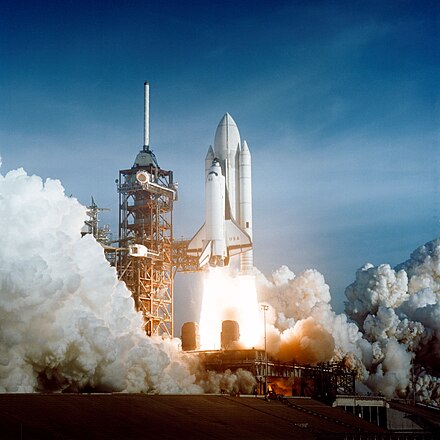
SpaceX, or Space Exploration Technologies Corp., is a private American aerospace manufacturer and space transportation company founded by entrepreneur Elon Musk in 2002. The company has gained widespread attention for its ambitious goals and achievements in the space industry. Here are some key aspects of SpaceX:
-
Launch Vehicles:
-
Falcon 1: SpaceX’s first orbital rocket, which became the first privately developed liquid-fueled rocket to reach orbit in 2008.
-
Falcon 9: A two-stage rocket designed for the reliable and safe transport of satellites and the Dragon spacecraft into orbit. Notably, the Falcon 9’s first stage is reusable, landing vertically for refurbishment and reuse in subsequent launches.
-
Falcon Heavy: Currently one of the most powerful operational rockets globally, Falcon Heavy is capable of carrying large payloads to orbit.
-
-
Dragon Spacecraft:
-
Cargo Dragon: Used for commercial resupply missions to the International Space Station (ISS).
-
Crew Dragon: Designed to transport astronauts to and from the ISS. It has been part of NASA’s Commercial Crew Program to restore human spaceflight capabilities from U.S. soil.
-
-
Starship:
-
SpaceX is developing the Starship spacecraft, intended for missions beyond Earth orbit. Starship is designed to be a fully reusable spacecraft capable of carrying large numbers of passengers or cargo. It is envisioned for missions to the Moon, Mars, and other destinations.
-
-
Starlink:
-
Starlink is SpaceX’s satellite internet constellation project. It aims to provide high-speed, low-latency internet access globally using a constellation of small satellites in low Earth orbit.
-
-
Mars Colonization:
-
Elon Musk’s long-term vision for SpaceX includes the colonization of Mars. The Starship spacecraft is a critical element in this vision, as it is intended to carry large numbers of people and cargo to the Red Planet.
-
-
Reusability:
-
A hallmark of SpaceX’s approach is the emphasis on reusability to reduce the cost of space travel. The company has successfully landed and reused the first stages of its Falcon 9 and Falcon Heavy rockets multiple times.
-
-
Commercial and Government Contracts:
-
SpaceX has secured contracts with NASA, commercial satellite operators, and other clients for a variety of space missions. This includes crewed spaceflights, satellite launches, and interplanetary exploration.
-
The Blue Origin project is the pursuit of the dream of Jeff Bezos, a former investigator in control and Amazon. By Jeff Bezos Blue Origin for the development of high-end motherboards in business modules is Selling tickets to millionaires where you can experience different things. After nearly 20 years of developing its technology and more than 20 test launches, Blue Origin today successfully launched a New Shepard rocket with four passengers into space and back for a landing.
 Picture from : https://www.blognone.com/node/123805
In the recent past, the space tourism war has heated up again. With the competition between 3 world famous billionaires like Jeff Bezos, owner of Blue Origin, Elon Musk, owner of SpaceX and Richard Branson, owner of Virgin Galactic.
The day has finally arrived: Richard Branson is the winner of this battle. Because he was able to successfully send a spaceship carrying five passengers to space before other billionaires.
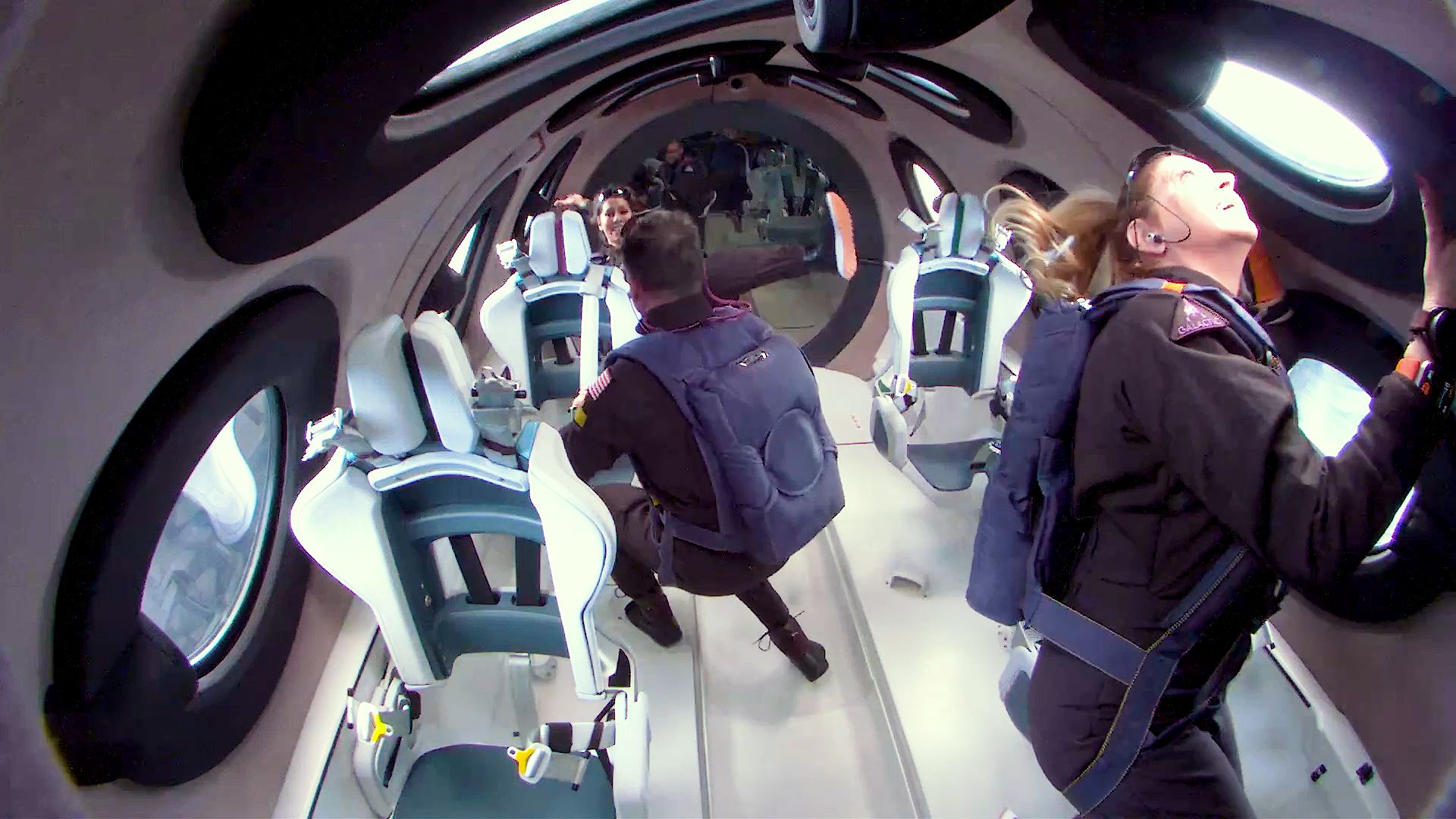
Virgin Galactic’s spaceship, called Unity, has been in development for more than 17 years since it was announced in 2004 by sending a spaceship with six passengers on a trip to outer space. It is at an altitude of approximately 85 kilometers.
 Picture from : https://edition.cnn.com/videos/business/2023/05/26/virgin-galactic-test-flight-space-tourism-contd-lon-orig-na.cnn-business
Richard Branson, owner of Virgin Galactic, posted a message on his personal Twitter account about this success, saying: “I have had dreams of looking at the stars since I was a child. Now I’m an adult in a spaceship and look down on our beautiful earth.”
People who want to experience space travel can do so. By purchasing tickets for 250,000 US dollars, or about 8.15 million baht, they will begin selling tickets to interested billionaires sometimes next year. The space tourism flight will take passengers on a five-minute experience of weightlessness.
This article is a part of Macroeconomic II , 751309 section 701. This class is teaching by Prof. Napon Hongsakulvasu.
